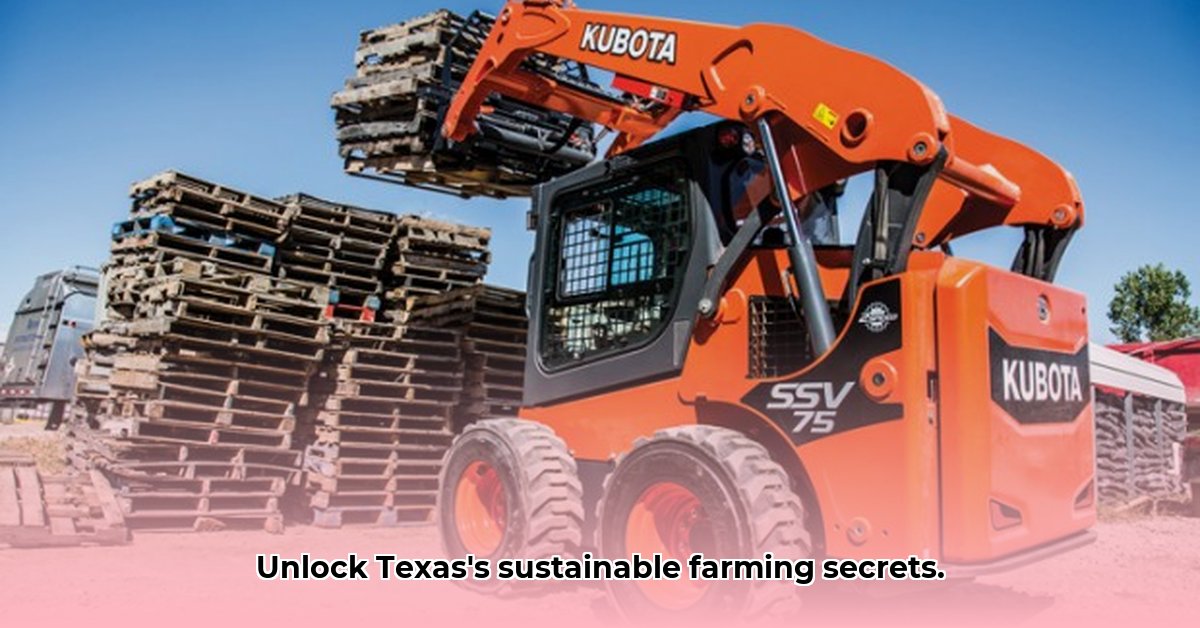
Grapevine, Texas, a city known for its charming downtown and vibrant community, is quietly becoming a hub for innovative farmers embracing sustainable agriculture. This isn't merely a trend; it's a crucial shift driven by the urgent need for water conservation, soil health preservation, and a reduction in the environmental impact of traditional farming methods. Kubota tractors, with their robust capabilities and technological integrations, are playing a pivotal role in this transformation. But how, exactly, are these machines contributing to a more sustainable agricultural future in and around Grapevine? Let's delve in. For more on Kubota's history, check out this link to Kubota history.
Precision Farming: Optimizing Every Acre
Imagine a Grapevine farmer meticulously tending their vineyard. Instead of broadly applying fertilizers and pesticides across the entire area, they utilize a GPS-guided Kubota tractor to precisely target these inputs. This is precision farming: providing each plant with exactly what it needs, when it needs it. This targeted approach drastically minimizes waste, resulting in significant cost savings on inputs and a greatly reduced environmental impact. Precision application extends to planting as well, ensuring even spacing and planting depth for optimal crop growth. This level of control was previously unattainable with older farming methods.
Water-Wise Farming: Conserving Precious Resources
Texas summers are notoriously hot and arid. Water conservation isn't simply a best practice; it's essential for survival, particularly for farmers. Kubota tractors, often integrated with sophisticated irrigation systems like drip irrigation (which delivers water directly to plant roots, minimizing evaporation and runoff), are critical to this effort. Sensors and automated systems monitor moisture levels, ensuring crops receive only the necessary water. This approach drastically reduces water consumption compared to older flood irrigation techniques. "Smart irrigation, guided by real-time data, saves not only water but also significantly lowers energy consumption," explains Dr. Anya Sharma, Agricultural Engineer, Texas A&M University.
Soil Health Management: Nurturing the Foundation of Farming
Healthy soil is the bedrock of any thriving farm. Kubota tractors, when used responsibly, contribute significantly to soil health maintenance. Many farmers are adopting no-till farming, a technique that minimizes soil disturbance. By avoiding plowing, farmers preserve soil structure, prevent erosion, and conserve moisture. Kubota's no-till implements facilitate this sustainable practice, reducing the need for heavy machinery that compacts soil and harms beneficial microorganisms. "Healthy soil is vital for long-term farm productivity and environmental sustainability," says Professor David Miller, Soil Science Department, University of Texas at Austin.
Pest Management: A Smarter, More Targeted Approach
Traditional pest control often employs broad-spectrum pesticides, which can harm beneficial insects and pollinators. Sustainable farming emphasizes Integrated Pest Management (IPM), a more holistic approach that combines various strategies, from natural predators to targeted pesticide application. Kubota tractors, equipped with precision spraying technology, enable farmers to apply pesticides only where necessary, minimizing environmental effects and reducing the risks associated with pesticide drift. This accuracy translates to less waste and a healthier environment.
Technology's Role: Data-Driven Decisions for Enhanced Efficiency
Modern agriculture is increasingly data-driven. Kubota tractors often integrate seamlessly with farm management systems. Sensors on the tractor and in the fields constantly collect data on soil conditions, moisture levels, and crop health. This information, processed by sophisticated software, assists farmers in making informed decisions regarding irrigation, fertilization, and pest control. The result is improved efficiency, reduced waste, and healthier, higher-yielding crops. "Data-driven farming allows for better resource allocation and maximizes yields while minimizing environmental impact," notes Dr. Sarah Chen, Data Scientist, USDA Agricultural Research Service.
Kubota Tractors: A Sustainable Investment
Investing in a Kubota tractor is a significant commitment. However, the long-term benefits of increased efficiency, reduced resource consumption, and improved yields frequently offset the initial cost. Many farmers perceive it as an investment in the future, ensuring the long-term health of their land and their business. The financial implications will depend on farm size and specific needs. A potential buyer should carefully weigh the machine's cost against projected savings due to reduced inputs and increased yields.
Taking the First Steps Towards Sustainable Farming
Transitioning to sustainable farming is a gradual process. It's not an overnight transformation but a series of incremental steps.
- Start Small: Focus on one or two areas, such as improving irrigation efficiency or implementing cover cropping. Avoid overwhelming yourself.
- Consult the Experts: Connect with local agricultural extension agents or experienced sustainable farmers for guidance and support. Many local organizations offer assistance in transitioning to sustainable practices.
- Embrace Technology: Explore technological solutions like precision farming tools to optimize resource utilization. Kubota tractors are just one part of a broader technological ecosystem.
- Monitor and Adapt: Regularly assess the impact of your practices and adapt your strategies accordingly. Sustainable farming is a continuous learning process.
- Consider Kubota: Evaluate how Kubota tractors align with your specific needs and budget.
Sustainable farming is not just about environmental protection; it's about long-term economic success. By embracing these innovative practices and utilizing tools like Kubota tractors, Grapevine farmers are building a more resilient and profitable agricultural future for themselves and the planet.